The Conversation (0)
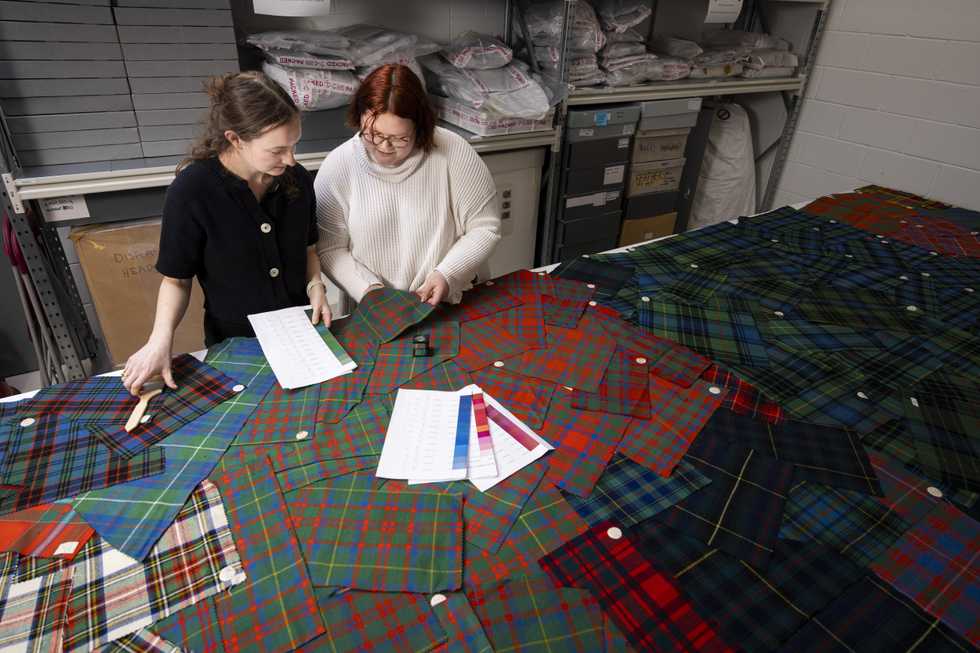
An archive of tartan samples has been donated to National Museums Scotland (Duncan McGlynn/PA)
An “exceptional” archive of almost 800 historic tartan samples has been gifted to the nation.
The textiles, some more than 200 years old, were produced by J&D Paton, one of the largest tartan manufacturers of the 19th and 20th centuries.
The collection has now been donated to National Museums Scotland (NMS) by Stuart Paton, the great-great grandson of the firm’s founder.
It includes textiles created for Queen Victoria and the royal family during the 19th-century Highland revival, military fabrics supplied to Scottish regiments, rare examples of tartans woven for women’s fashion and previously unrecorded clan tartans.
Experts said the collection, which spans the history of the firm from its foundation in the 1820s to its closure in the 1960s, could potentially rewrite the understanding of tartan.
I am delighted to find a long-term home for the collection with National Museums Scotland
Stuart Paton
It will now be catalogued and made available for research at the National Museums Collection Centre in Edinburgh.
Dr Mhairi Maxwell, curator of modern & contemporary history at NMS, said: “Tartan is one of the most recognisable symbols of Scotland and the exceptional J&D Paton collection is of immense importance to ongoing research into the history of the iconic textile.
“We have only just begun to uncover the stories woven through this remarkable archive and I’ve no doubt there are many discoveries waiting to be made, all thanks the generosity of Stuart Paton and his family.”
J&D Paton was at its most popular in the late 19th century and carried on production through the two world wars.
At its peak the firm, family run for five generations, employed hundreds of people across four factory sites in Stirlingshire, near Tillicoultry.
It produced internationally-renowned tartans and tweeds, and won awards for fine fashion textiles which were sometimes woven through with silk.
Previous knowledge of the history of tartan in the 18th, 19th and 20th century has been dominated by what is known about Wilsons of Bannockburn, another “prolific” producer of tartan based in Stirlingshire.
Dr Maxwell said the acquisition of the J&D Paton archive will help provide a fuller picture of tartan production during that period.
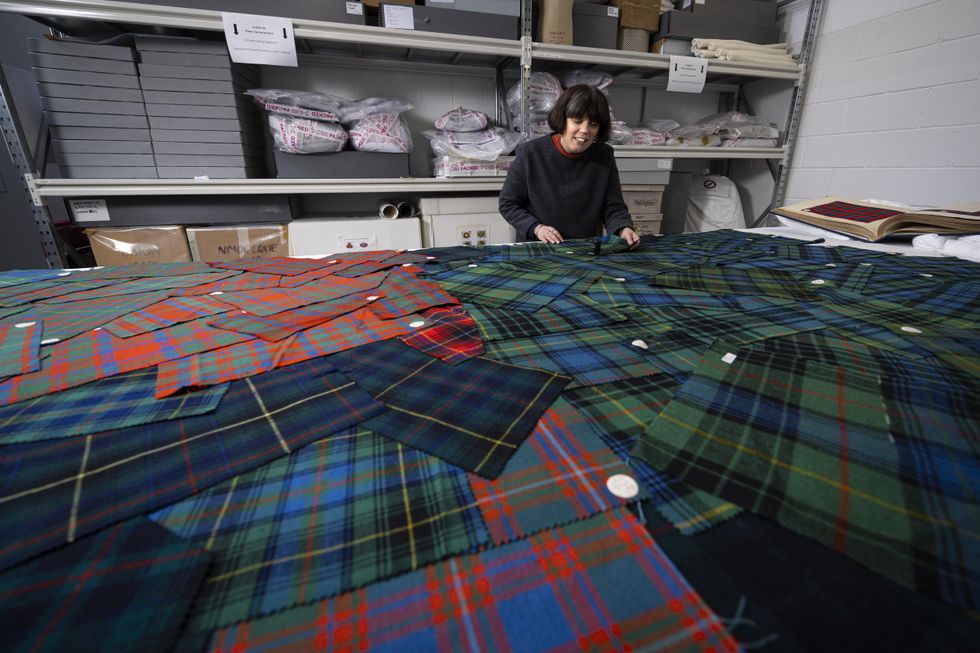 Curator Mhairi Maxwell examines the Paton tartan sample (Duncan McGlynn/PA)
She said: “We are really hoping that this will rewrite the history of tartan production as we currently understand it.”
NMS said the archive provides a rare and detailed picture of the history of mass manufacturing at a time when tartans were expanding into global marketplaces and new fashions.
Dr Maxwell said: “J&D Paton also seem to have been the pioneers of more fashionable tartans and that’s really exciting, because the time that they were really mass-producing these tartans is the peak of the kind of romanticism of Scotland.
“The idea that Queen Victoria was decking out Balmoral in her tartans and was herself pictured in beautiful tartan shawls, it was no surprise then that there would be a demand from the middle classes and the elite to also have a bit of their own fashionable tartan.
“So, we’re really hoping this archive can shed light on that and we’ll be looking at the colours that were popular.”
She said the archive, featuring a “kaleidoscope of tartan”, has been “beautifully” preserved by the Paton family.
Stuart Paton, former director of J&D Paton, said: “I am delighted to find a long-term home for the collection with National Museums Scotland.
“The donation is made in memory of my godfather Captain Paton, a long-time chairman of the company, in the hopes it will become a valuable asset for those researching and learning about Scotland’s textile heritage for generations to come.”
NMS is keen to hear from any descendants of employees who worked in J&D Paton factories and have any items relating to their time there, or have memories or stories that have been passed down through the generations, and asked them to get in touch by contacting [email protected]
Top 100