The Conversation (0)
Democrats flip Florida state seat that represents Trump’s Mar-a-Lago
THE INDEPENDENT
A dramatic political realignment is unfolding in Utah, a state long considered a conservative stronghold, where Democrats are now vying to outflank each other on the left. This unexpected shift is largely due to a recent redistricting shake-up, which has carved out a deeply progressive district centred on Salt Lake City, potentially influencing whether Democrats can regain control of the US House in the upcoming midterms.
Leading this intriguing contest is Ben McAdams, a former congressman whose political identity has undergone a notable transformation. Once describing himself as pro-life and having voted against a federal minimum wage increase, Mr McAdams is now campaigning for a comeback in the more Democratic-leaning district, publicly pledging support for abortion rights and a higher minimum wage during a recent forum for young voters.
His primary opponents have criticised Mr McAdams as the most conservative candidate in the field, to which he insists he is only "moderate in tone." This approach marks a significant departure from his 2018 campaign, when he unseated a Republican incumbent during Donald Trump’s first term. Representing a district that included parts of the deeply conservative Utah County, he was, by one analysis, considered the most conservative House Democrat during his single term before losing his re-election bid to a Republican.
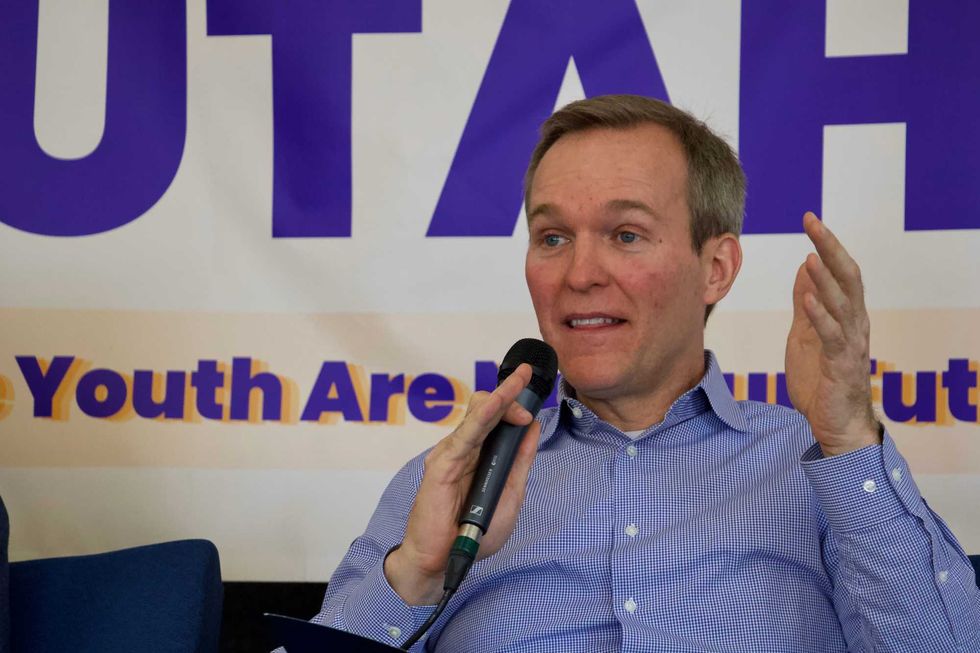 Former U.S. Rep. Ben McAdams speaks at a forum for candidates running to represent Utah's new Democratic-leaning congressional districtAP Photo/Hannah Schoenbaum
Mr McAdams is now seeking election in the new 1st district, encompassing all of Salt Lake City and much of its suburbs, a boundary established after a protracted legal battle over Utah’s congressional map. The winner of this primary is widely expected to secure victory in the November general election, with Mr McAdams facing a crowded field of half a dozen Democratic challengers.
"What makes me a strong candidate is the fact that I’ve actually delivered on a lot of things people are talking about," Mr McAdams told The Associated Press. "It’s easy to have a strongly worded tweet or talking points, but I can actually follow that up with accomplishments that are making life better."
The Democratic National Committee Chairman, Ken Martin, views Utah’s 1st district as a crucial foothold in a red state, believing it could not only aid the party in winning the House this year but also lay the groundwork for long-term success. He noted the party is investing unprecedented sums in Utah – at least $22,500 a month – to build infrastructure ahead of the 2030 census, when the fast-growing state could gain additional House seats. Mr Martin believes the key to success lies in meeting voters where they are and offering a platform that resonates with "not just the majority of Democrats, but the majority of the people in the district."
Unlike state Republicans, Democrats are holding an open primary on 23 June, allowing any district resident to vote regardless of party affiliation. This could benefit a candidate like Mr McAdams, who previously cultivated a broad base of support. However, state party leaders are confident that registered Democrats hold a strong enough majority to decide the primary outcome.
Democrats have historically struggled to establish a firm presence in Utah, where approximately half the population belongs to The Church of Jesus Christ of Latter-day Saints, whose members typically lean Republican. Despite the church being headquartered in Salt Lake City, the capital remains one of the few areas where Democrats hold local control and religion plays a less dominant role in politics.
Mr Martin anticipates the youth vote will be pivotal for Democratic success and longevity in Utah, which boasts the youngest state population with a median age of around 32. "This is a group that’s up for grabs," he told the AP, cautioning against the common Democratic assumption that young voters are automatically aligned with them. He suggested Utah could become "one of the biggest potential swing states in the country."
However, Robert Axson, chairman of the Utah Republican Party, dismissed this notion. "Everything I am seeing shows the younger generation continuing to lead in the promotion of our conservative principles," he said. "While we see the generational passing of the torch, there is not a political swing away from the values that make Utah a wonderful place to call home."
The scramble for the Gen Z vote was evident at a recent candidate meeting in Taylorsville, where several young voters expressed their desire to elect a progressive. Milo Hohmann, 22, from Holladay, championed state Senator Nate Blouin as the "firebrand" Utah needs in Congress. Mr Blouin, arguably the most vocal Democrat in the Republican-dominated state legislature, has garnered endorsements from prominent national progressives, including Senator Bernie Sanders and Representatives Pramila Jayapal, Greg Casar, and Maxwell Frost.
Mr Blouin stated his aim is to energise an electorate accustomed to settling for candidates who "play nice" with Republicans. He criticised Mr McAdams’ voting record while defending himself against accusations of never having passed legislation, explaining that he has been effectively blacklisted by Republican legislative leaders. He noted that at least two bills he originally sponsored eventually passed after being advanced under other lawmakers’ names. "I don’t measure progress by how many times you can get pats on the back from Republicans," he told the AP.
His stance resonated with Mr Hohmann, a transportation engineer, who believes Utah has "an electric moment" to elect a Democrat unwilling to compromise their values. Hannah Paisley Zoulek, 19, from Millcreek, is leaning towards Mr Blouin or his state Senate colleague, former teacher Kathleen Riebe, but expressed a reservation about Mr Blouin. "I struggle a bit with Senator Blouin’s emphasis on how hard he holds his own positions," Ms Zoulek said. "It’s great if you want to make a statement, but not necessarily if you want to do the work."
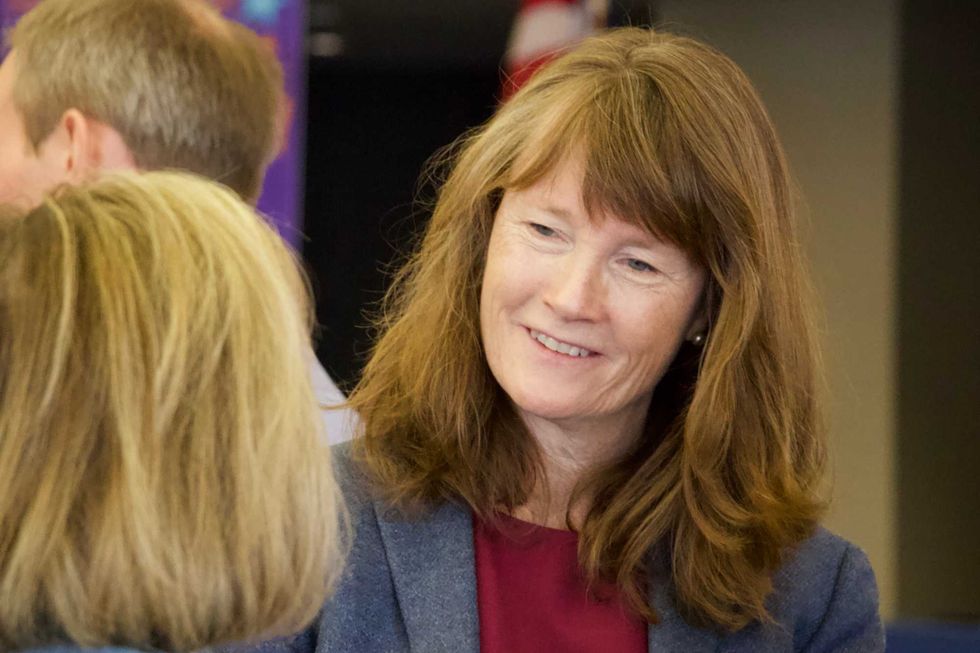 Utah state Sen. Kathleen Riebe, a candidate for Utah's new Democratic-leaning congressional districtAP Photo/Hannah Schoenbaum
Neither Mr Hohmann nor Ms Zoulek felt Mr McAdams was the right fit for the new district given his more moderate past. However, Ben Iverson, a 17-year-old from Cottonwood Heights who will vote for the first time this year, disagreed. Considering himself very progressive, Mr Iverson believes Mr McAdams is "a great option," noting that he voted to impeach Trump in 2019, despite knowing it could jeopardise his re-election.
"I don’t think left-wing voters want a moderate Democrat who will capitulate to the right," Mr Iverson said, adding that he believes Mr McAdams has successfully shed his moderate label. Mr Iverson highlighted Mr McAdams’ consistent presence in local politics, serving as Salt Lake County’s state senator, then its mayor, and representing much of the area in his previous congressional district.
"I’ve been in the trenches, rolling up my sleeves, saying not ‘How do we pass a bill that will never become law?’ but ‘How do we actually enact legislation that will make people’s lives better?’" Mr McAdams concluded.
Top 100