The Conversation (0)
Christopher Nolan was rejected from film school. Now he’s worth $250 million
Fortune / VideoElephant
Christopher Nolan's The Odyssey has already cemented itself as the biggest moment of cinema this year, and between a star-studded cast including Tom Holland, Zendaya, Matt Damon, and Anne Hathaway, and the almost 400 miles of film used to bring it to life, it's not one that'll be forgotten any time soon.
If you're yet to settle in for the near-three-hour blockbuster, the plot follows the Greek king Odysseus (Matt Damon) as he battles mythical creatures and the psychological toll of the Trojan War to return home to his wife Penelope (Anne Hathaway) and son Telemachus (Tom Holland) in Ithaca.
As you can imagine, it's action-packed, emotional, and has been dubbed as "monumental" by critics - but, as with every great movie, its best moments lie in its details.
In the film, when Odysseus leaves Ithaca for the Trojan War, neither he nor Penelope knows how long they will be separated or whether they will ever see one another again.
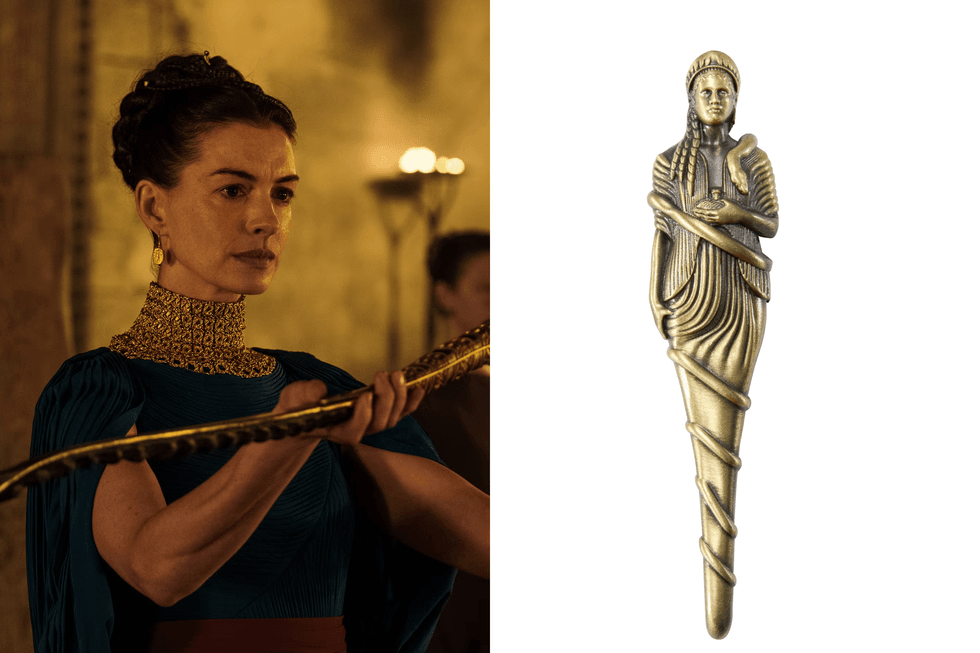 Universal Pictures/The Noble Collection
So, she gifts him a pin with a rather distinctive design that also allows others to identify him throughout his journey.
If somebody claims to have encountered Odysseus during his absence, Penelope can ask whether he was wearing the golden Athena pin to help determine whether the sighting is genuine, and becomes a big part of the movie's plot.
However, its significance is actually far more impactful than we could've given it credit for, and helps us learn more about the characters than meets the eye.
“The pin functions almost like a personal seal", explains Neil Dutta, Managing Director at jeweller Angelic Diamonds. "It's a distinctive design, so if somebody claimed to have met him during his travels, describing the pin would help prove they really had.
“Because Penelope is the one who gives it to him, the pin identifies Odysseus not just as an individual, but as the King of Ithaca and Penelope's husband. It links him to his home and the life he's trying to return to.
“The fact it's a pin is important too. Unlike an object that's carried in a bag or pocket, it's designed to be worn where other people can see it. That means it serves a practical purpose by helping identify Odysseus, while also giving him a constant reminder of Penelope and the home he left behind.”
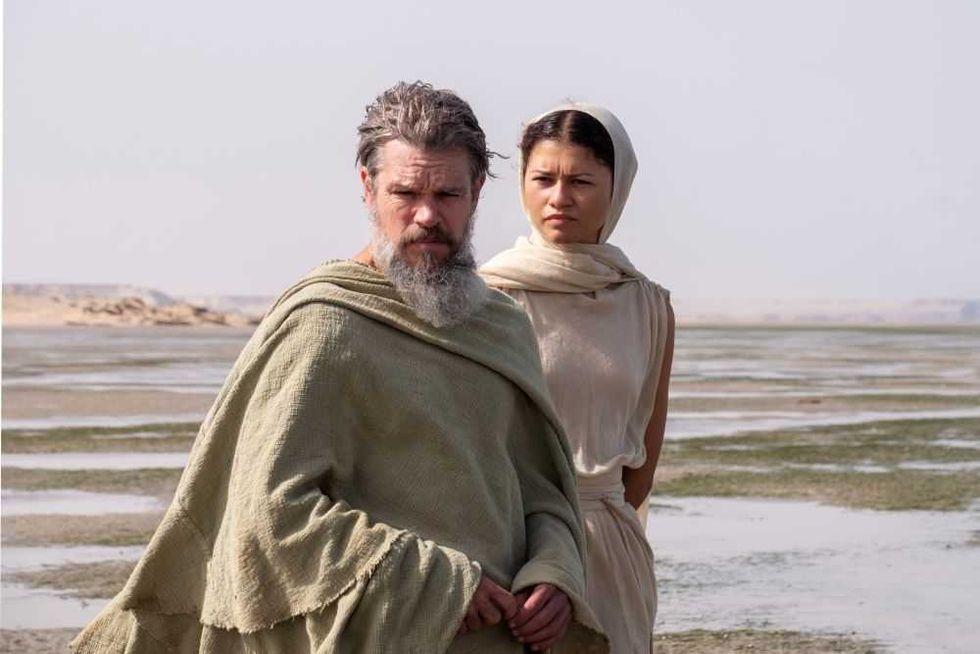 Universal Pictures
Odysseus keeps the pin throughout his 20-year absence, carrying one of the few physical connections between the dangerous life he is living and the home he is trying to reach.
The pin depicts Athena, the Greek goddess of wisdom, civilisation and strategic warfare, who guides and protects Odysseus throughout his journey.
Neil notes: "The interesting thing isn't that the pin depicts a goddess, it's which goddess Penelope chooses.
“If Penelope wanted to represent strength alone, there were other gods she could have chosen. Instead, she chooses the goddess of wisdom and strategy.
“Those are the qualities that define Odysseus throughout the story. He doesn't overcome the Cyclops, Circe or the Sirens through brute force. He survives because he thinks, adapts and outmanoeuvres danger.
“That makes Athena a fitting choice. She's the thread that runs through his journey, so including her on the pin turns it into a symbol of the qualities Penelope hopes will carry him safely back to Ithaca.
“It also creates a beautiful symmetry within the story. Penelope gives him Athena's image at the beginning of his journey, and Athena becomes one of the forces guiding him back to Penelope and Ithaca."
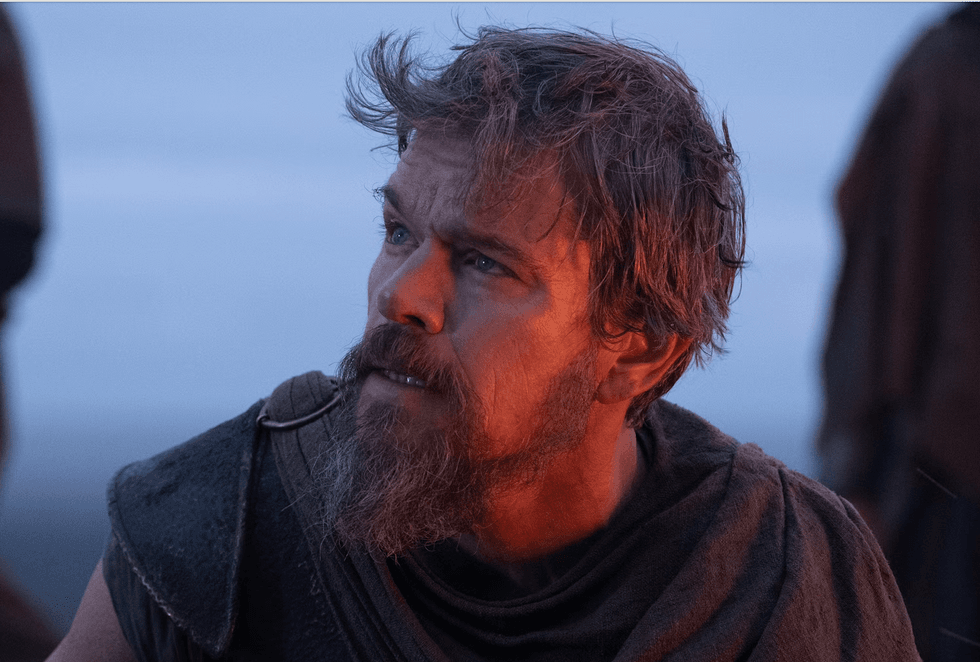 Universal Pictures
But, one detail you probably didn't pick up on was the symbolism behind why it was made from gold in the first place - and it's a touch that translates in real life too.
To the Ancient Greeks, gold represented far more than wealth. It was associated with the divine, strength and immortality, and was commonly used for important jewellery, treasured heirlooms and offerings made to the gods.
Some Ancient Greeks also believed the gods could manifest themselves through gold, allowing the wearer to carry a symbolic connection to their power and protection.
"The choice of gold is every bit as important as the choice of Athena," says Neil.
"If Penelope simply wanted to give Odysseus something valuable, there were plenty of materials she could have chosen. But gold adds another layer because it was closely associated with the gods and with ideas of permanence and strength.
"It's also a metal that doesn't tarnish in the way many others do. That's quite fitting for a story centred around enduring love and loyalty. While almost everything around Odysseus changes during those 20 years, the symbolism of the pin doesn't.
"When you look at the piece as a whole, every decision feels intentional. Athena represents wisdom and protection, while the gold reinforces the idea that those qualities, and Odysseus's bond with Penelope, are meant to endure."
Even before the film's release, it would appear Universal Pictures wanted the pin to become a big part of its symbolism.
Replica Athena pins were sent to influencers, drawing attention to what may initially seem like a small costume detail, but is in fact one of the story's most symbolic pieces of jewellery.
While a golden pin depicting Athena may not be the most obvious jewellery gift today, Neil believes Penelope’s approach is still relevant almost 3,000 years later.
Neil said, “Every element of the pin has been chosen to communicate something, from the image of Athena to the use of gold.
“That is a useful starting point when choosing jewellery today. Think about the person, the occasion and the meaning you want the piece to carry.”
The Odyssey is out in cinemas now
Why not read...
The Odyssey is out in cinemas - 32 biggest memes and reactions
Reviews are in Christopher Nolan's The Odyssey
Sign up to our free indy100 weekly newsletter
Top 100