The Conversation (0)
iStock
The wellness industry is booming. It’s set to be worth $9 trillion by 2028 and shows no signs of slowing down.
Hazy nights in clubs have been replaced by the younger generation in favour of cryotherapy, red light therapy, oxygen chambers to name but a few, all in pursuit of health, for now - and longevity for the future.
However, there’s one wellness pursuit that’s stood the test of time and, quite often, brings us more dopamine than any post-workout sauna could: our pets.
 Pexels
Most dog owners will agree that 10-15 years will quite simply never be enough for all of the adventures we’ve mentally planned with our furry friends, which could explain why there’s now more crossover than ever between the human world of wellness, and the extra mile we go for our dogs to live as long as possible.
Once a hunting animal, running through the wild seeking out food, our dogs can now be found firmly tucked up under their blankie as we wait on them hand-and-foot.
In fact, it's thought owners will spend up to £2,000/$2,691 every single year on their dogs.
What started as trading kibble for organic and raw diets, has now expanded into a whole world of pet therapies and pampering; much of which have crossover with our own routines.
 Paris Hilton
"The boom in pet wellness is largely driven by the way our relationship with animals has evolved", Dr. Charlotte Inness MRCVS, a leading veterinarian and founder of VetMedi.co.uk tells us.
"Pets are now viewed as true family members, so people are willing to invest in their comfort, longevity, and day-to-day wellbeing in the same way they invest in their own.
"At the same time, there’s been growing awareness of preventive health and holistic care in human wellness, and that mindset naturally spills over into how people care for their pets."
The way we care for our pups has only been propelled by social media, too; you may remember a viral anecdote about Paris Hilton’s chihuahua, Harajuku B**** living to 23 thanks to red light therapy - it's never been confirmed, however, the DJ and reality mogul does have a biohacking room in her home, so it wouldn't be surprising to anyone.
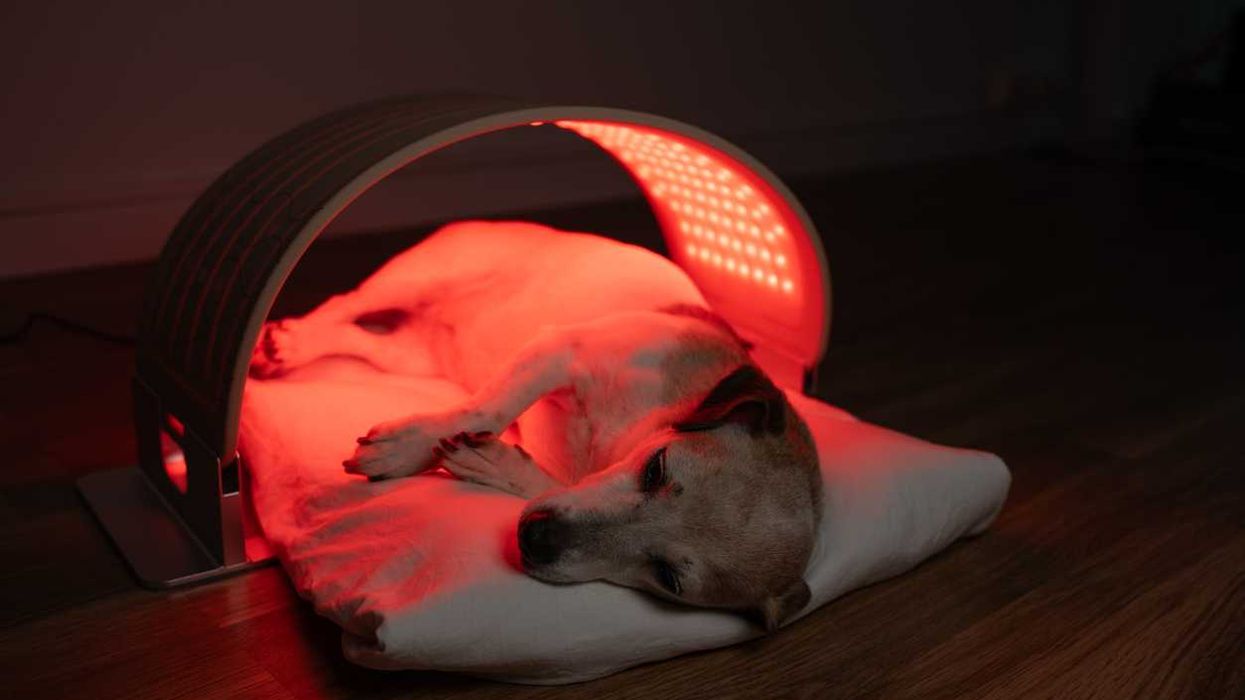
Soon after it became a topic of conversation, our TikTok algorithms were fuelled by spaniels and sausage dogs spending their naps under giant red beams of light, akin to the red light therapy masks on every Gen Z-ers Christmas list right now.
"I immediately started using my current body red light mask on my baby", one person confessed.
"I have used it on my dog as well at least I’m not alone on this one", another admitted.
Red light therapy has been around since the 1960s and became popularised in the 90s, when Nasa would use it for wound healing on astronauts, thanks to its regenerative impact.
It works by sending low-level red wavelengths to skin cells, prompting mitochondria (the cell's powerhouses) to produce more energy (ATP), which boosts cellular repair.
Now, it’s widely used for cosmetic purposes (most notably, anti-ageing) - and it would appear we’ve taken the concept and ran with it.
Red light-emitting jackets and panels are now readily-available to buy for our pets, proving that if there’s even a glimmer of hope that it could keep our pets with us for longer, we’ll buy into it - no matter the cost.
A similar trajectory has followed with other holistic wellness practices too, from acupuncture and cold laser therapies for arthritis, to vitamin shots and oxygen chambers.
"B12 shots were a GAMECHANGER for our ancient chihuahua from ages 14-18", one person noted, claiming their dog went from "near-death" to having a "pep in her step".
But does it actually have any backing? Or are we merely so invested in our pets that we're willing to overlook the reality?
"Red light therapy and therapeutic laser treatments have become common in veterinary rehabilitation because they can help reduce inflammation, support tissue repair, and ease pain", Dr Charlotte clarifies.
"They’re especially valuable for animals recovering from surgery, managing arthritis, or healing soft-tissue injuries. Red light therapy shows promise as a supportive tool for improving comfort and mobility in animals, which can indirectly contribute to longevity.
 Pexels
"It isn’t a 'life-extending' treatment on its own, but it can help manage chronic inflammation, support joint health, and improve recovery from injury."
However, if you're not busy transforming your house into a makeshift solarium, you shouldn't worry too much.
"Adding extra 'wellness' steps to a pet’s routine can certainly be valuable, but it’s important to keep that in perspective, Dr Charlotte notes.
"The foundation of a long, healthy life for any animal is still very simple: good nutrition, regular exercise, mental stimulation, routine veterinary care, and a safe, low-stress environment. Those basics do far more for overall health than any add-on treatment."
She adds: "Ultimately, the surge in pet wellness reflects a shift toward more intentional, compassionate, and individualised care. People want their pets not just to live longer, but to live better."
Why not read...
This common supplement has been dubbed ‘nature’s Ozempic’ - an expert weighs in
Doctors are now ‘prescribing’ trips to Sweden for one ‘essential’ reason
Sign up to our free Indy100 weekly newsletter
Top 100