













The Conversation (0)
Science & Tech
Related video: Inside NASA's decades-long testing ground in a California national park
Even the most advanced, technical and high stakes missions aren't immune from common and very relatable workplace issues.
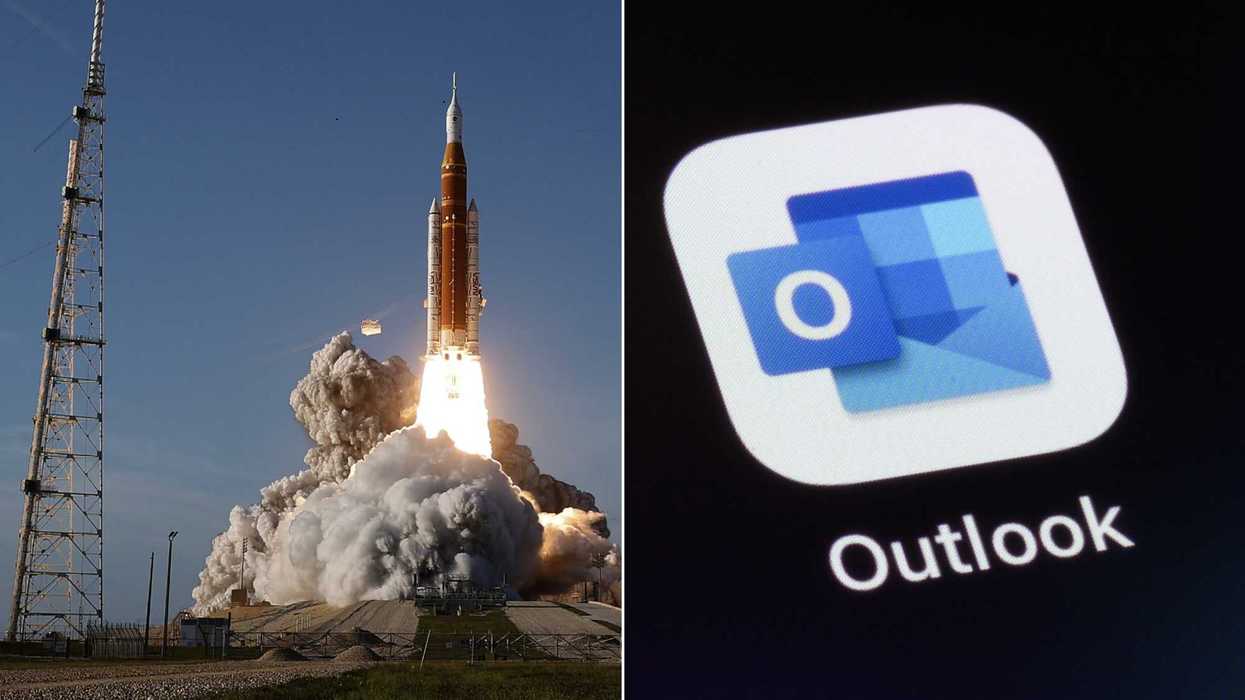
NASA's Artemis II mission saw a new Orion spacecraft called Integrity launch successfully on Wednesday (1 April) from the Kennedy Space Center in Florida.
Astronauts have already had to deal with a malfunctioning toilet and required support from mission control on Earth to deal with the blockage.
And mission control has had to be called to help out with another problem - this time for issues accessing Microsoft Outlook.
On one of NASA's official feeds from the mission, one of the astronauts can be heard raising the technical issue.
It turns out two versions of Microsoft Outlook were installed on a device and neither were working. The issue was sorted after mission control managed to "remote in" and fix it.
right now the astronauts are calling houston because the computer on the spaceship is running two instances of microsoft outlook and they can't figure out why. nasa is about to remote into the computer
[image or embed]
— niki grayson (@nikigrayson.com) April 2, 2026 at 7:06 AM
The latest update on the mission from NASA at the time of writing is that the spacecraft has left Earth's orbit and is heading for the Moon.
NASA's most recent update said: "NASA's Orion spacecraft fired its main engine for five minutes and 50 seconds beginning at 7.49pm ET (12.49am BST on Friday 3 April, 4.49pm PT) to successfully complete the translunar injection (TLI) burn, sending the crew in Orion out of Earth orbit and on a trajectory toward the Moon.
"After the TLI burn that sent Orion on its path to the Moon, the lunar science team began building a Lunar Targeting Plan, a guide to what the crew will look at on the Moon's surface during its approximately six-hour observation on Monday (6 April).
"The targeting plan will include documenting features that can help scientists understand how the Moon and solar system formed, such as craters, ancient lava flows and cracks and ridges created as the Moon's outer layer slowly shifted over time.
"One feature that will be added to the plan is a solar eclipse, which will last for nearly an hour toward the end of the flyby window."
Elsewhere from indy100:
How to join the indy100's free WhatsApp channel
Sign up to our free indy100 weekly newsletter
Have your say in our news democracy. Click the upvote icon at the top of the page to help raise this article through the indy100 rankings.