The Conversation (0)
Science & Tech
Nasa's Artemis II set to launch, first crewed lunar mission in over 50 years
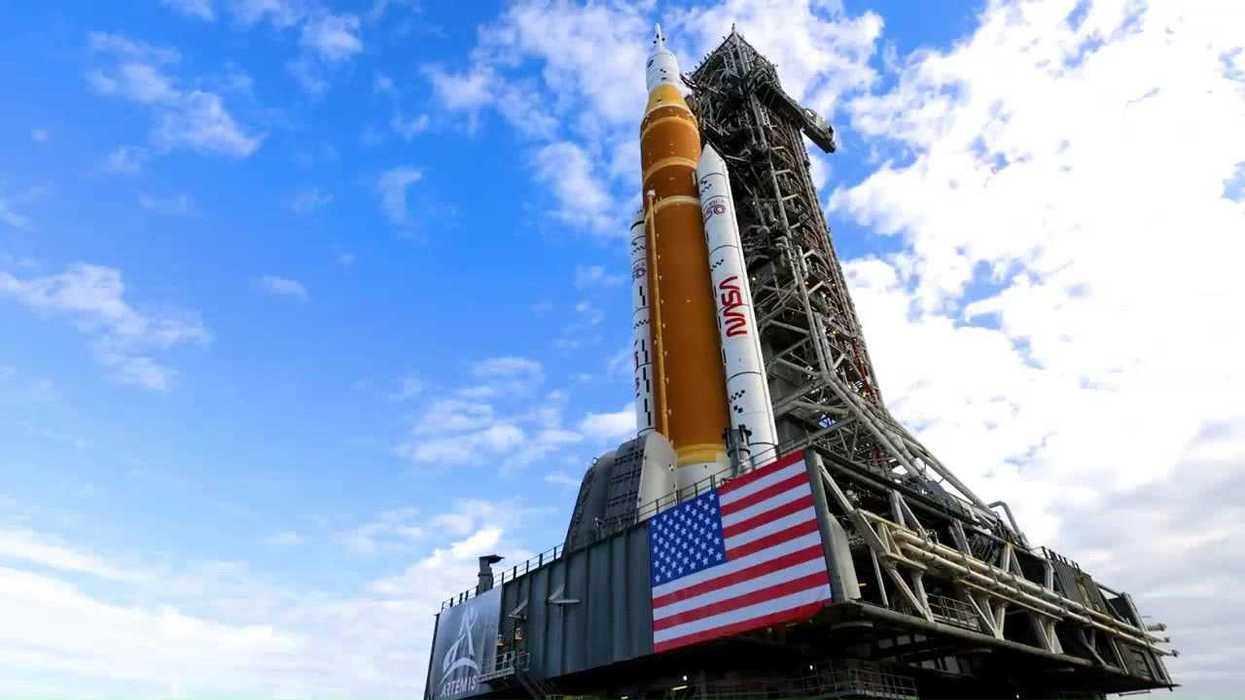
A new Orion spacecraft named Integrity is set for take-off on Wednesday, when the Nasa mission Artemis II launches from the Kennedy Space Center in Florida within a two-hour window from 6:24pm EDT (11:24pm BST).
Nasa describes the wider Artemis programme as sending astronauts “on increasingly difficult missions to explore of the Moon for scientific discovery, economic benefits, and to build our foundation for the first crewed missions to Mars” – and yes, there was an Artemis I.
Artemis I concerned “the first integrated flight test of Nasa’s Deep Space Exploration Systems”. It was unmanned and took place at the end of 2022.
The programme goes all the way up to Artemis V, with Artemis III testing “one or both commercial landers” from Elon Musk’s SpaceX and Jeff Bezos’ Blue Origin in low Earth orbit in 2027, and a lunar surface mission launched by late 2028 as part of Artemis V.
Artemis II, meanwhile, will see Orion carry out two orbits of Earth before venturing around the Moon in a figure-of-eight pattern before re-entering Earth’s atmosphere.
It involves four astronauts: Reid Wiseman, Victor Glover, Christina Koch and Jeremy Hansen.
However, four is probably the smallest number surrounding this mission, so allow us to crunch some
The whole mission will last just over a week, with 10 days equating to 240 hours.
Basic maths, we know, but to put that into much bigger terms, that would take you a fair way into your third watch of the entirety of Game of Thrones across its 74 episodes (and that’s with no breaks).
Given that, according to Nasa, the average person needs around 0.84kg of oxygen a day to survive, 90kg of oxygen used to launch Orion is the same as an average human’s daily oxygen consumption over more than 107 days.
Gasp.
 HBO
HBO
For comparison, the shortest cycling distance between John O’Groats and Land’s End in the UK is 874 miles, according to Global Adventure Challenges.
Fancy doing that just over 783 times?
According to the British Antarctic Survey, the distance between Cambridge in the UK and Rothera Station in Antarctica is 14,435 kilometres (or around 8,969 miles).
Anyone up for 26 trips to Antarctica?
 Pexels
Artemis II marks the first time humans have left low Earth orbit since Apollo 17 in December 1972.
If you were to look 19,474 days into the future, as opposed to the past, then that would take you to July 2079.
It really was that long ago.
And if you fancied living in Orion yourself, then you should probably know that you only have 330 cubic feet of living space available to you, which is the same as two minivans.
Pretty cosy.
The official launch broadcast can be viewed on YouTube from 12:50pm EDT (5:50pm BST).
Why not read…?
Sign up to our free Indy100 weekly newsletter
How to join the indy100's free WhatsApp channel
Have your say in our news democracy. Click the upvote icon at the top of the page to help raise this article through the indy100 rankings.